
I Remember When Search Actually Sent Traffic
I’ve been doing SEO since the early 2000s. Back then, when you ranked well, you got traffic—actual visitors, real people clicking on your site. The deal was simple: Google needed content, website owners provided it, and in return, we got exposure, clicks, and the chance to build a business.
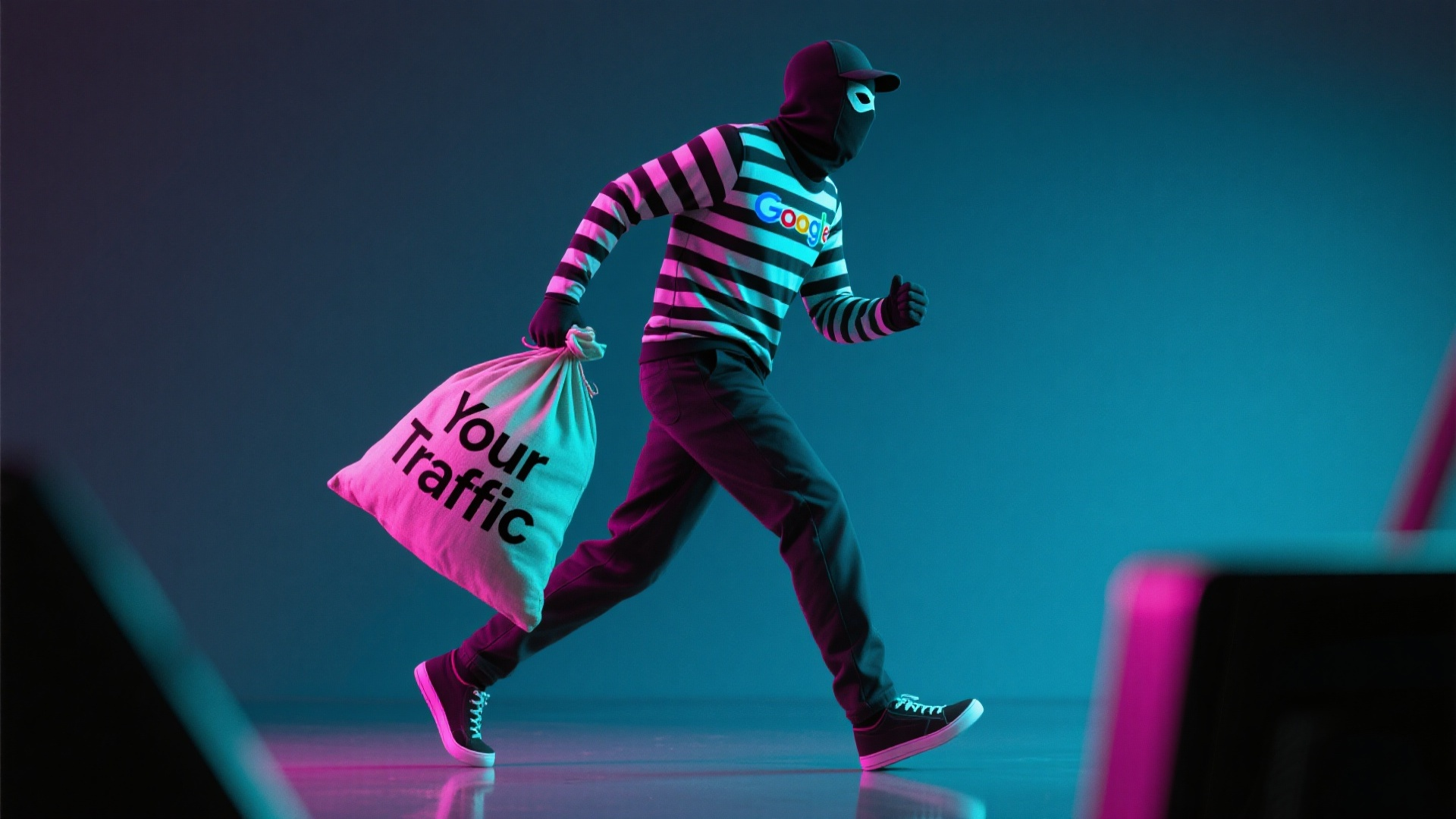
Fast forward to today, and that deal has changed dramatically. Search engines now hoard traffic like a dragon sitting on a pile of gold. Instead of sending users to the best websites, Google (and its AI-powered minions) just gives people the answers directly. Why let a website get the traffic when Google can ‘helpfully’ answer the question itself?
And let’s not even start on all those tools that used to generate clicks. Weather sites, exchange rate calculators, stock price trackers—all gone. Google embedded all those functions right into search. The businesses that built them? Well, cheers for your effort.
And now, eCommerce is feeling the squeeze too—but to a lesser extent. Google’s AI-driven results and zero-click searches mean product information, comparisons, and even pricing details are often displayed without the need to visit the store’s website. However, unlike informational searches where users can get everything they need without clicking, people still have to visit an eCommerce site to complete a purchase.
That said, the way people shop online is changing. Users no longer manually browse multiple eCommerce sites—Google is essentially acting as a comparison engine, pulling product details, reviews, and prices directly into search. Instead of going from site to site, users make their decision right there in Google’s interface and only click through when they’re ready to buy. Great for users, but for small online retailers? It’s another barrier to visibility.
Zero-Click Searches: Where Your Content Works for Google, Not You
If you’re not familiar with zero-click searches, here’s how they work: Someone types a question into Google, and instead of showing a list of websites, Google itself provides the answer. No click needed. No traffic for you.
– Featured Snippets – Google extracts part of your article, presents it at the top, and the user never needs to visit your site.
– Knowledge Panels – Instead of directing users to a brand’s website, Google summarises everything into a neat little box.
– Instant Answers – Want a quick fact, weather update, or sports score? Google gives it to you directly, bypassing the websites that actually gathered the information.
– AI-Generated Responses – Google’s Search Generative Experience (SGE) now stitches together answers from multiple sources and presents them as its own creation.
– Product Listings in Search – Google now displays product details, images, and sometimes prices directly in the search results—meaning potential customers might never click through to an independent eCommerce site until they’ve already made their decision.
Essentially, search engines have evolved from helping users find content to being the content provider themselves—without actually creating anything. It’s like running a restaurant where you cook the meals, set the table, and just as the customers are about to sit down, Google swoops in, serves them sample-sized bites, and tells them they’re full.
AI is Making It Even More Interesting (And Somehow, We’re Still Feeding It)
As if zero-click searches weren’t bad enough, AI has stepped in to supercharge the problem. With AI-generated search results, Google no longer even needs to quote your content. Instead, AI scrapes multiple sources, pieces together an answer, and presents it as an ‘original’ response.
Now, don’t get me wrong—I think AI is incredible. The first time I used ChatGPT, I felt the same excitement I had when I first went online with dial-up in the late ‘90s (minus the screeching noises and the need to yell at someone to get off the phone). AI is making life easier, helping with research, and even creating some seriously impressive content. But when it comes to SEO? It’s a double-edged sword.
It’s the ultimate SEO irony:
1. We optimise for Google.
2. Google takes our content and presents it without clicks.
3. We get less traffic, but we keep optimising.
4. Google continues taking our work.
And now, eCommerce businesses face an evolving landscape. AI is changing how users shop by acting as a comparison tool, summarising reviews, and even suggesting products before they’ve even searched for them. While people still have to visit an eCommerce site to buy, the decision-making process is being controlled by AI in ways that limit a brand’s ability to influence that journey.
And we all just accept it. Brilliant.
The Big Question: Why Do We Keep Creating Content?
At some point, you have to ask: What’s the point? If AI search and zero-click results keep using our hard work without sending traffic back, why are we still feeding the machine?
Well, for now, websites still have some lifelines:
– Brand recognition still matters. Even if AI is borrowing your content, being cited as a source still builds credibility (for now).
– Not all searches are zero-click (yet). People still click when they need detailed answers, complex solutions, or in-depth guides.
– AI isn’t perfect. It still gets things wrong, and when people need real expertise, they’ll seek out original sources.
– Owning first-party data is crucial. If you rely purely on search for traffic, you’re at Google’s mercy. Building an email list, a social following, or a strong direct audience is now more important than ever.
– eCommerce brands need to focus on loyalty. Search visibility is shrinking, so brands need strong communities, repeat customers, and direct marketing strategies to stay competitive.
But let’s be honest—none of this fixes the core problem. The old SEO game is over. Google isn’t in the business of sending traffic anymore—it’s in the business of keeping it.
What’s Next? Adapt or Accept the Traffic Apocalypse
AI and zero-click searches aren’t going away. So, we have two choices:
1. Adapt. Build content that AI can’t easily replicate—personal insights, opinions, stories, and experiences. Lean into brand-building and direct audience relationships.
2. Accept the new world. Keep feeding Google for whatever scraps of traffic remain and hope AI search doesn’t make websites irrelevant altogether.
The reality is, we’re in the middle of one of the biggest shifts I’ve seen in my 20+ years in SEO. The rise of the internet was huge. Smartphones changed everything. And AI? AI is another massive transformation.
The difference is, this time, we’re all creating content for an AI that no longer needs us.
So, the next time you write an article, ask yourself—who is really benefiting? 🚀
